

People who live with anxiety often describe a familiar rhythm: early discomfort → rising symptoms → the fear that an attack might hit all at once. Preventing anxiety attacks isn’t only about willpower; it’s about having reliable systems and supports in place before the spiral starts. Small, consistent habits often create the biggest buffer.
Quick Snapshot for When You Don’t Have Time to Read Everything
Anxiety becomes more manageable when you blend body-based practices, environmental choices, and relationship support. Grounding techniques (like slow breathing), tending to physical health, reducing stimulant use, and talking to someone you trust all play a role. So does giving yourself permission to rest before you’re overwhelmed.
Why Prevention Works Better Than Reaction
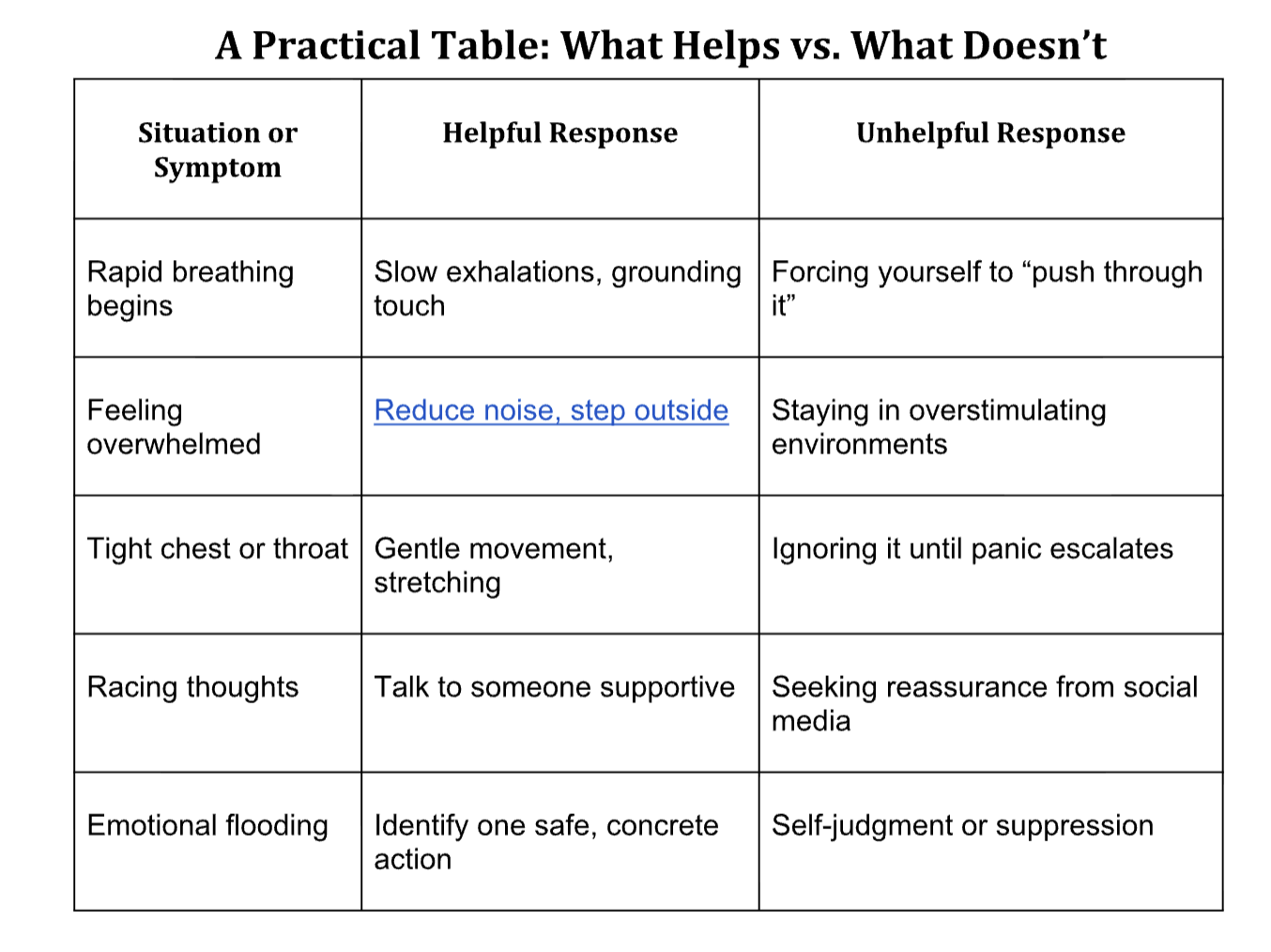
Anxiety attacks often follow predictable physiological arcs: tension, accelerated breathing, narrowing focus, emotional flooding. Interrupting that arc is easier early than late. Think of prevention as creating “micro-exits” from escalating stress—doors you can step through long before the situation feels unbearable. Below is a fast-reference checklist you can use to catch warning signs early.
Early-Intervention Checklist
● Notice shoulder, jaw, or stomach tension
● Check your breathing rate
● Ask, “Am I catastrophizing?”
● Reduce sensory load (noise, crowding, screens)
● Drink water and slow your movement
● Give yourself permission to pause

Key Strategies for Reducing the Frequency of Anxiety Attacks
Lean on Your Support Network
Human connection is a regulatory tool. Whether it’s texting someone who “gets it” or calling a friend to talk through a stressful moment, relating to others breaks isolation and interrupts spiralling thoughts. The goal isn’t to unload everything—it’s to feel seen.
Spend More Time Outdoors
This isn’t just poetic advice. Exposure to fresh air, greenery, or even a short walk around the block can shift your nervous system out of a threat response. Many people find their baseline anxiety drops noticeably when they make “outside time” part of their weekly rhythm.
Practice Breathing and Meditation
Short, structured breathing is one of the most reliable ways to interrupt an attack. Box breathing, 4-7-8 breathing, or simply lengthening your exhale stimulates your vagus nerve and slows your body’s “alarm.”
Build a Rhythm of Movement
Regular exercise—gentle or vigorous—helps release stored tension and regulate stress hormones. Walking, swimming, stretching, dancing in your living room, anything counts. Consistency matters more than intensity.
Eat in a Way That Supports Your Nervous System
Meals that include protein, healthy fats, and slow-digesting carbohydrates keep blood sugar steady, which directly reduces physiological anxiety triggers. Skipping meals or relying on ultra-processed foods can make your body more vulnerable to anxiety spikes.
Avoid Substances That Amplify Anxiety
Caffeine, nicotine, alcohol, and recreational stimulants can all mimic the bodily sensations of panic. Reducing or eliminating them—even temporarily—can give you a clearer sense of what anxiety is doing on its own.
A Different Angle: Skill-Building to Regain a Sense of Control
Sometimes anxiety attacks are tied to uncertainty about your career, skillset, or direction. Pursuing an educational path can restore a sense of agency. By deepening your knowledge and expanding your abilities, you shift from “I’m stuck” to “I’m progressing,” which often reduces anxiety significantly.
For instance, working toward a computer science degree online can help you strengthen technical abilities—from programming to AI foundations—that open new career pathways. If your long-term goal involves technology, this structured learning can transform apprehension into competence. Online degree programs also make it easier to study while maintaining your job, allowing you to grow without destabilizing you schedule.

Common Questions People Ask When Trying to Prevent Attacks
Q: Why do anxiety attacks seem to come out of nowhere?
A: The buildup is usually gradual, but subtle—poor sleep, unresolved stress, skipped
meals, or background worries can accumulate until the body tips into overload.
Q: What if breathing exercises make me more anxious?
A: That’s common. Try focusing on slower exhalation instead of “deep” breathing, or
use tactile grounding (touching a textured object, warm water, or pressing your feet
firmly to the ground).
Q: Do I need therapy if I only have occasional attacks?
A: Therapy can help anyone who wants tools, perspective, or relief. You don’t have to
hit a crisis point to benefit.
Q: How long does it take to reduce attack frequency?
A: Many people notice changes within weeks, but it varies. Prevention is a long-term
process, not an overnight fix.
An Extra Resource You Might Appreciate
If you want structured, science-backed tools for calming your nervous system, Anxiety UK offers free guides and therapist directories.
A Small but Mighty Bulleted List of Bonus Ideas
● Try a “sensory swap”: dimmer lights, softer textures, or noise-canceling headphones.
● Use micro-breaks instead of long breaks—standing up for 30 seconds can interrupt spiraling.
● Keep a “calm kit” with items that soothe you: scents, textures, or affirming notes.
In Closing
Preventing anxiety attacks is about building a lifestyle that supports your nervous system. With steady habits—movement, nourishment, grounding, and connection—you create real protection against escalating panic. You don’t have to fix everything immediately. Start small, keep going, and remind yourself that anxiety is manageable with the right tools and support.