
The reality for many of us today, particularly in affluent parts of the western world, is that we have more than we can use, and eat more than we can really digest. Whereas people once worried about death through hunger, a significant proportion of the world today worries about the effects of over-indulgence. Obesity in much of the developed world is a growing statistic, with the burgeoning middle classes of poorer countries, replicating the trend. (And of course, the homeless and hungry are not to be forgotten in this statement – they are present in every society, the world over)
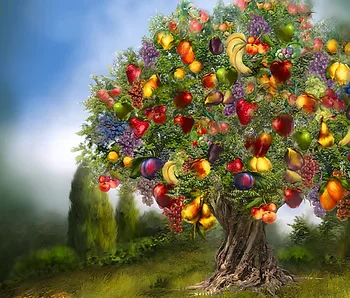
There is no inherent problem with abundance – infact, it’s comforting to know that we have enough, and have more to rely on during rainy days, or when times get tough. We should all be able to enjoy a hearty meal or indulge in small pleasures without feeling guilty for it. However, if we hoard and celebrate at the expense of others, it makes us all that much poorer.
There is a primitive part of the human brain, which causes us to do just this – to survive, even if this means others have less. Civilisations that fail to curb this instinct, become less civilised, less compassionate and less caring. We see the effect of this pattern in Great Britain today, where there is a growing divide between those who have, and those who have not. Being a rich economy, we still have a gross imbalance of resources. I am not making a political statement here. Rather, just a human one. As a Psychologist, I know that when our humanity begins to fragment, we cannot enjoy peace as individuals, or as a society. There is so much in the news that challenges my sense of hope in the human race, but all is not lost. When I am feeling pessimistic, I recall a story I once read from a community in a distant land. I’d like to share this with you. This story of hope comes from the most unlikely of places, within the heat and material lack of sub-Saharan Africa. It is here that a group of children become symbols of courage and human sensibility. “We believe in Ubuntu” they cry, as an Anthropologist gazes in sheer astonishment at their miraculous feat. Just a few moments before, that visiting scientist had provoked the children to compete for a basket of fruit. “Just there, under the tree”, he spoke, “I have placed the sweetest of foods… get there before anyone else and your prize will be to eat to your heart’s content. Only the winner, will get the prize – remember….only the winner”. But nobody runs. Hungry and ragged they may appear, yet arm in arm they walk towards the tree. None rushes ahead of the others, to take the food for themselves. And on approaching the tree, they sit and offer the food to one another, before taking a bite for themselves.
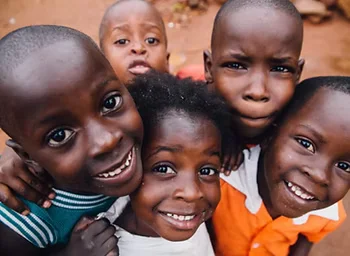
“What is Ubuntu?”, the Anthrpologist asks, completely bewildered at what he has just witnessed. One child says, “it’s how can I eat, when my brother is hungry”, another says “it’s like feeling bad, when I am warm, but my friend is cold”. Raised within a wisdom tradition, in which community and communal living is cherished, there is no other way to be, but Ubuntu. Anything else, denies life. I saw this myself during a visit to Zimbabwe many years ago. I was wonderstruck at how cars would stop on dirt paths, affording strangers a lift to the next town (or at least, as far as the driver was going). It was like an organic transport system – not funded, not planned, but there for everyone to benefit from. Without it, life would be almost impossible for poorer villagers. It was a kind of Ubuntu. I often reminisce of that experience, and contemplate how life here in England would be different, if we all offered just a little more help and support to those who need it. Infact, this kind of community sentiment is not missing in the West – we probably express the spirit of Ubuntu through the phrase, ‘Random Acts of Kindness’. The language may be different, but it is still rooted in the concept of generosity, sharing and giving. Why am I writing about this as a wellbeing piece for a newsletter? Well, I have yet to meet anyone who behaves with sincere kindness towards others yet feels they have less left for themselves.
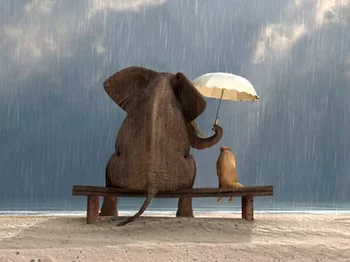
Kindness always begets kindness. It enhances our sense of self, which ultimately nurtures our self-esteem and positivity of outlook. We grow, when we share the harvest of our labour. If life feels diminished, or the future feels bleak, I invite you to experiment with sharing a little of yourself with someone else. It may be through your smile, a caring gesture, or just giving someone a space ahead of you in the queue. It sounds so basic, but I guarantee you will feel better for it. The beauty is, so will the person who has just received your gift of Ubuntu.